Technology
Vietnam's AI Titans Reveal 2026-2028 Roadmap: What's Coming Next for Ho Chi Minh City's Tech Ecosystem
As global uncertainty swirls, local startups and established players are doubling down on AI applications designed specifically for Southeast Asian markets.
How we reported this
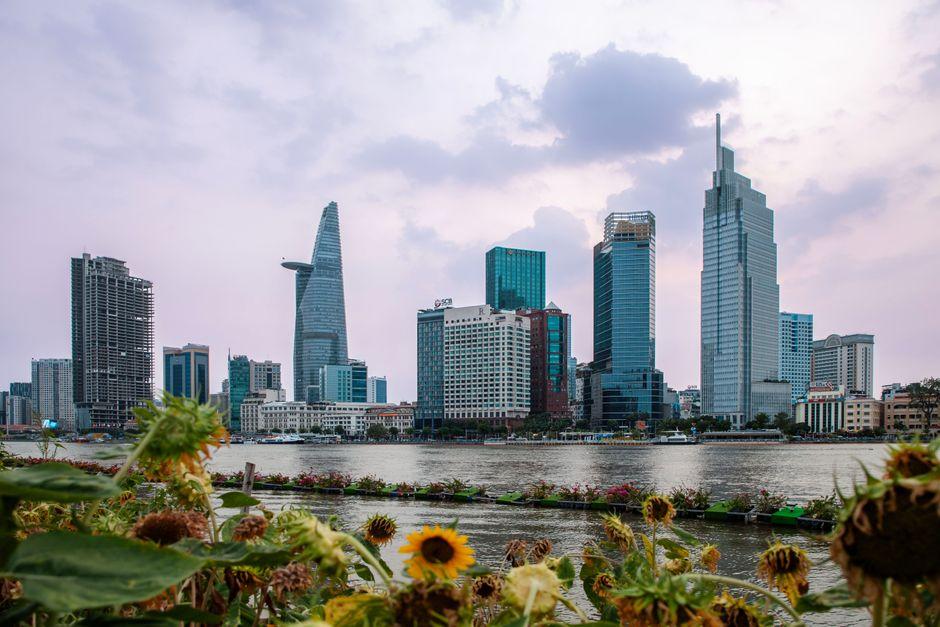
The energy in District 1's tech corridor is palpable. Walking through the startup hubs clustered around Nguyen Hue Boulevard and the gleaming office towers of Bitexco Financial Tower, one thing is clear: artificial intelligence is no longer a distant frontier for Ho Chi Minh City's business community-it's the immediate present, with ambitious plans stretching through 2028.
At the midpoint of 2026, several major initiatives are taking shape. Local AI development firms are investing heavily in Vietnamese-language large language models, a critical gap that has limited adoption among small and medium enterprises across the Mekong Delta and beyond. Industry sources suggest these models could reach market by early 2027, with initial pricing around 2-3 million VND monthly for SME packages-significantly cheaper than current international offerings.
Manufacturing is another focal point. Companies operating in the industrial zones surrounding Thu Duc City are piloting computer vision systems for quality control, reducing defect rates by up to 18 percent according to preliminary trials. Over the next 18 months, expect these systems to become standard, with integration costs dropping by approximately 35 percent as local suppliers enter the market.
The logistics sector, vital to Ho Chi Minh City's role as a regional trade hub, is seeing perhaps the most dramatic transformation. AI-powered route optimization and predictive maintenance systems are being rolled out across major operators along the Saigon River ports and at Tan Son Nhat International Airport's cargo facilities. Developers are targeting a 2027 launch of a unified platform serving the entire southern region, potentially saving the industry billions in fuel costs annually.
Real estate-historically a cornerstone of Ho Chi Minh City's economy-is embracing AI-driven property valuation tools. Several firms in District 4 and District 7 are developing systems that analyze market data, neighborhood trends, and development pipelines to predict property values with greater accuracy than current methods. These platforms should go commercial by mid-2027.
Not everything is optimistic. Skills gaps remain acute. Universities and vocational centers are struggling to produce enough AI-trained talent, though programs at the University of Science and the University of Technology are expanding capacity. Industry observers note that without addressing this bottleneck, many planned projects could face delays.
The global backdrop-trade tensions, geopolitical shifts, and currency volatility-adds uncertainty. Yet Ho Chi Minh City's tech leaders appear undeterred, viewing local AI development as both an economic opportunity and a path to technological sovereignty. The roadmap emerging today will likely define the city's competitive position for years to come.